

Grout cleaning services can make dark grout look lighter when removable soil is hiding its original color; cleaning does not turn originally dark grout into light grout. Permanent staining, a previous color treatment, or damaged joints require a different assessment. The useful question is whether the darkness sits on the surface or belongs to the grout itself.
- Grout cleaning services remove soil; they do not change the original pigment of dark grout.
- Steamly Pro offers tile and grout cleaning for South Florida homeowners seeking practical advice and realistic expectations.
- A small test area helps distinguish removable buildup from staining or an existing color treatment.
- Judge grout color after drying, not while the joints are still wet.
Why this matters
A dark grout line does not tell you what treatment it needs. Tracked-in dirt, cleaning residue, original pigment, and moisture can produce similar appearances, but they call for different decisions. Treating every dark joint as dirt creates unrealistic expectations and encourages unnecessary chemical use.
For your 2026 cleaning estimate, describe the result you want: removing buildup, reducing unevenness, or changing the grout color. Those are different requests. Ask for cleaning when you want the existing surface cleaned; ask about restoration when you want a different finish.
Steamly Pro is best for homeowners seeking tile and grout cleaning with realistic expectations. Material inspection should guide the discussion, not a promise that every dark line will become pale.
Grout cleaning services: can dark grout become lighter?
Yes, if dirt or residue is making the grout darker than its underlying color. A suitable cleaning process removes loosened soil and leaves the existing grout exposed. If the grout was installed with dark pigment, cleaning should reveal that dark color rather than replace it.
Use the distinction below before deciding what to request. These are conditions to investigate, not diagnoses you can make from color alone.
| Grout condition | Can cleaning make it lighter? | Best for | Limit to understand |
|---|---|---|---|
| Removable surface soil | Yes, where soil is obscuring the grout | Restoring the existing appearance | Remaining stains can still create uneven color |
| Cleaning-product residue | Yes, if the residue is removable with a suitable process | Removing buildup from routine maintenance | The tile and grout must tolerate the chosen treatment |
| Originally dark grout | Not by changing its original pigment | Cleaning without intentionally changing color | A lighter finish requires a separate color-change discussion |
| Persistent staining | Cleaning removes soil but does not guarantee stain removal | Assessing what improves before further work | Some discoloration remains after cleaning |
| Cracked or missing grout | Cleaning does not repair the joint | Identifying repair needs before treatment | Loose or deteriorated material needs a repair assessment |
A lighter test patch is evidence of improvement in that patch, not a guarantee for the whole floor. Grout near a kitchen work area can have a different contamination history from grout in an entryway or bathroom. Ask the cleaner to inspect representative areas rather than using the easiest spot as the only reference.
Removable buildup: cleaning can reveal lighter grout
Grout lines sit below many tile surfaces, which makes them easy places for soil and cleaning solution to collect. Repeated mopping can leave material in the joints when dirty solution is not removed effectively. A floor can therefore look reasonably clean across the tile faces while the grout remains dark.
The benefit of professional cleaning is a controlled process for loosening and removing that material. Inspection determines whether a treatment is suitable; agitation helps release buildup; soil removal takes the loosened material away. Applying a cleaner without removing the dirty solution does not complete the job.
The limitation is just as important: removing buildup exposes what is underneath. That underlying grout can still be naturally dark, stained, worn, or inconsistent in color. Judge success by the removal of soil and the condition of the surface, not by whether every joint becomes white.
Originally dark grout: cleaning is not recoloring
If the grout was originally charcoal, brown, or another dark shade, professional cleaning does not make a pale finish the correct outcome. You are paying to clean the existing material, not erase its pigment. A cleaner should explain that distinction before treatment begins.
Color treatments and grout replacement are separate approaches to changing appearance. They require their own suitability assessment, surface preparation, and maintenance discussion. Do not assume a tile and grout cleaning appointment includes either service.
If you cannot remember the original color, look for installation records, leftover material, or a less-exposed area. Those clues help the discussion but do not replace inspection. Different areas can have different moisture exposure, wear, or previous treatments.
Stained or damaged grout: set a different expectation
A stain is not the same as loose surface dirt. Discoloration can remain after the surface has been cleaned, particularly when material has penetrated the grout or changed its appearance. Repeating stronger treatments without understanding the cause adds risk without establishing a realistic endpoint.
Cracks, missing sections, and loose joints need attention beyond cleaning. A clean crack is still a crack. Ask whether repair assessment should come before cleaning, especially where the joint is visibly deteriorated.
Moisture also deserves a separate conversation. Wet grout often appears darker than dry grout, so a damp joint can mislead you about its final color. If an area stays dark while surrounding joints dry, investigate the reason rather than repeatedly treating it as dirt.
How a useful grout assessment works
For a 2026 appointment, request an explanation of the material, the suspected cause of discoloration, and the expected limit of cleaning. The process below gives you a practical framework for evaluating that explanation. It does not require you to identify the grout type yourself.
- Material inspection. Identify the tile surface, grout condition, visible damage, and any known previous treatments. Natural stone needs particular care because unsuitable chemistry can damage its finish.
- Soil assessment. Explain where the darkness occurs and how the floor is maintained. Kitchen residue, tracked-in soil, and a persistently damp bathroom joint should not automatically receive the same diagnosis.
- Test area. Assess a representative spot with a treatment suited to the material. Look for soil removal and changes in the surface, not simply the lightest possible result.
- Soil removal. Remove loosened material and cleaning residue using a method appropriate to the surface. Ask how the process avoids leaving dirty solution in the joints.
- Dry assessment. Compare the result after the grout has dried. Identify remaining stains or defects separately from removable buildup.
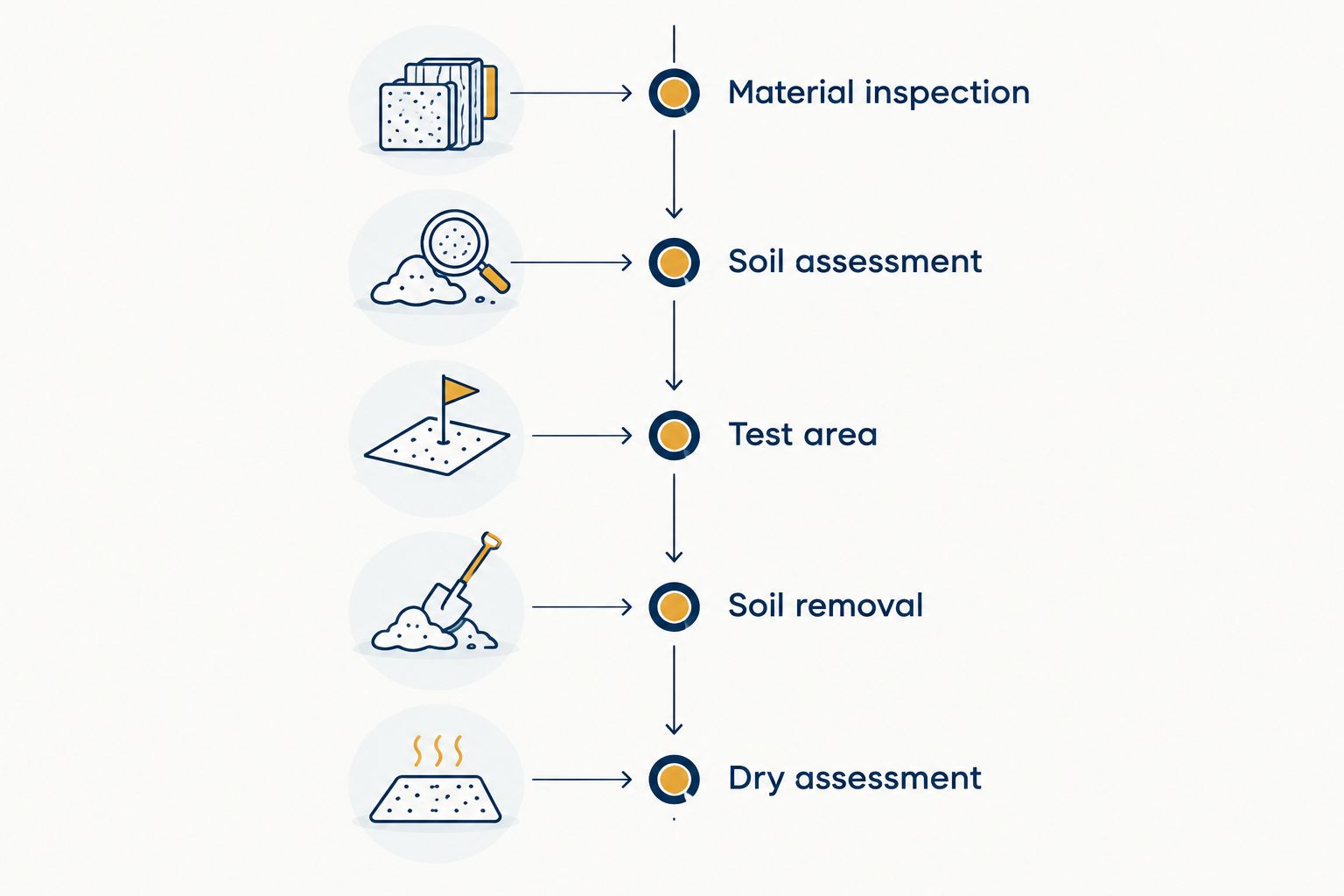
A careful assessment also gives you a stopping point. If a test removes soil but leaves a stain, the next question is whether further treatment is suitable—not whether the technician can keep increasing chemical strength. No responsible cleaner can guarantee every stain will disappear.
Why grout-cleaning results vary
The same cleaning method does not produce the same appearance on every floor. These factors explain why a result should be discussed by area and material rather than promised from a photograph.
- Original color: Cleaning reveals the existing grout; it does not establish a new pigment color.
- Grout condition: Sound joints and deteriorated joints require different handling. Cleaning does not rebuild missing material.
- Type of buildup: Surface dirt, oily residue, and persistent staining do not behave identically during treatment.
- Previous treatments: A coating, color treatment, or unsuitable household cleaner can affect the surface and the cleaning response.
- Tile suitability: The surrounding tile limits which chemistry and agitation are appropriate, especially around natural stone.
- Moisture: Damp grout looks different from dry grout, making an immediate color judgment unreliable.
Give the cleaner your maintenance history before work starts. Bring product names or photographs of containers if you have them. An accurate account is more useful than describing every previous product as a tile cleaner.
What should your tile and grout estimate include?
Your 2026 estimate should define the areas to be cleaned, the visible condition of the joints, and the expected result. Ask whether the assessment distinguishes tile cleaning from grout stain treatment. A vague promise to make the floor look new does not explain what work you are authorizing.
For homes in Boynton Beach, Boca Raton, and Delray Beach, Steamly Pro offers tile and grout cleaning as part of its mobile cleaning services. Its service area covers Palm Beach County, Broward County, and Port St. Lucie. Request a free estimate and explain whether your priority is cleaning, uneven color, or a possible color change.
Before accepting an estimate, ask:
- What appears to be causing the dark grout?
- Is the proposed treatment suitable for both the grout and the tile?
- Which areas need testing or a repair assessment?
- What discoloration is expected to remain?
- What preparation and aftercare should you follow?
These questions help you compare the scope rather than compare vague promises. They also make it easier to recognize when your desired appearance requires work beyond ordinary cleaning.
Request a free cleaning estimate
Tell Steamly Pro where the grout is dark and whether you want cleaning or a different color.
How do you keep cleaned grout from darkening again?
Use maintenance products appropriate to both the tile and grout, and follow their label directions. More concentrated cleaner is not automatically more effective. Product residue can create another maintenance problem instead of solving the first one.
Remove loose soil before wet cleaning and avoid spreading dirty cleaning solution across the floor. Pay attention to the joints rather than judging the floor only by the shine of the tiles. If your routine repeatedly leaves dark buildup, discuss the products and method with the cleaner.
Do not use an internet chemical recipe to chase a lighter color. Acidic products can damage acid-sensitive stone, and aggressive treatment can harm unsuitable surfaces. Never mix household cleaning chemicals.
Does grout need sealing after cleaning?
Sealing depends on the grout material, its condition, and any existing treatment. Not every grout requires the same maintenance, and a sealer is not a substitute for cleaning or repair. Ask what is suitable before requesting it as an automatic add-on.
A sealer also does not turn dark grout into light grout or remove an existing stain. If sealing is recommended, discuss preparation and the product's instructions separately from the cleaning outcome. Confirm the service scope rather than assuming sealing is included.
Should you compare grout color while it is wet?
No. Compare grout color after it has dried because wet grout often appears darker. An immediate inspection is useful for spotting remaining surface residue, but it is not the final color assessment.
For a 2026 cleaning visit, ask how and when to assess the finished appearance. Use similar lighting when comparing areas, and distinguish a remaining stain from a joint that is still damp. A photograph taken under different lighting can exaggerate the apparent change.
FAQ
Can grout cleaning services turn black grout white?
Grout cleaning services cannot turn originally black grout white by removing soil. If dark buildup is covering light grout, cleaning can reveal the lighter original surface; intentional recoloring is a separate treatment.
Why is my grout still dark after professional cleaning?
Grout can remain dark because of its original pigment, persistent staining, previous treatments, or moisture. Assess the joints after drying and ask the cleaner to explain remaining discoloration separately from surface soil.
Can I tell whether my grout is dirty or naturally dark?
A suitable test area and material inspection help distinguish removable soil from the underlying grout color. Installation records or less-exposed areas provide clues, but appearance alone does not establish the cause.
Will stronger chemicals make my grout lighter?
Stronger chemicals do not guarantee lighter grout and can damage unsuitable tile or grout. Choose treatment by material and contamination rather than increasing chemical strength to chase a color change.
Does cleaning fix cracked or missing grout?
Cleaning does not repair cracked or missing grout. Ask for a repair assessment so deteriorated joints are not mistaken for a cleaning problem.
Can I request grout cleaning with carpet or upholstery cleaning?
Steamly Pro offers tile and grout, carpet, upholstery, and area rug cleaning. Request a free estimate that identifies each surface and ask how the work should be planned for your property.
One last thing
For your 2026 estimate, describe your goal without prescribing the result: you want the removable soil gone and an honest assessment of anything that remains. That gives the cleaner room to distinguish cleaning from repair or color change.
Do not make the palest grout line your only measure of success. A properly assessed floor can be cleaner while retaining its original dark grout. The useful outcome is a suitable treatment and a clear explanation—not a promise to change a color that was never dirt.