Before booking rug cleaning in Boca Raton, check the rug’s fiber, backing, dye stability, stain history and the cleaner’s plan for protecting your floor and drying the rug. Your estimate should distinguish routine soil removal from stain or pet odor treatment, because cleaning the visible surface does not resolve every problem underneath.
- For rug cleaning Boca Raton homeowners can book confidently, ask for material inspection before agreeing to treatment.
- Steamly Pro offers mobile area rug cleaning; confirm your rug’s suitability and treatment scope before booking.
- Pet odor treatment depends on contamination depth, not just the size of the visible stain.
- Ask where the rug will dry and how the cleaner will protect the floor underneath.
Steamly Pro offers mobile area rug cleaning across Palm Beach County, Broward County and Port St. Lucie, including Boca Raton, Boynton Beach and Delray Beach. Request a free estimate with photos of the rug, its label and any affected areas so the conversation starts with the actual material and condition.
What should you check before booking rug cleaning in Boca Raton?
Book the assessment, not a promise that every stain will disappear. A useful rug-cleaning estimate in 2026 explains what needs inspection, what treatment is proposed and which outcomes remain uncertain until the material is checked.
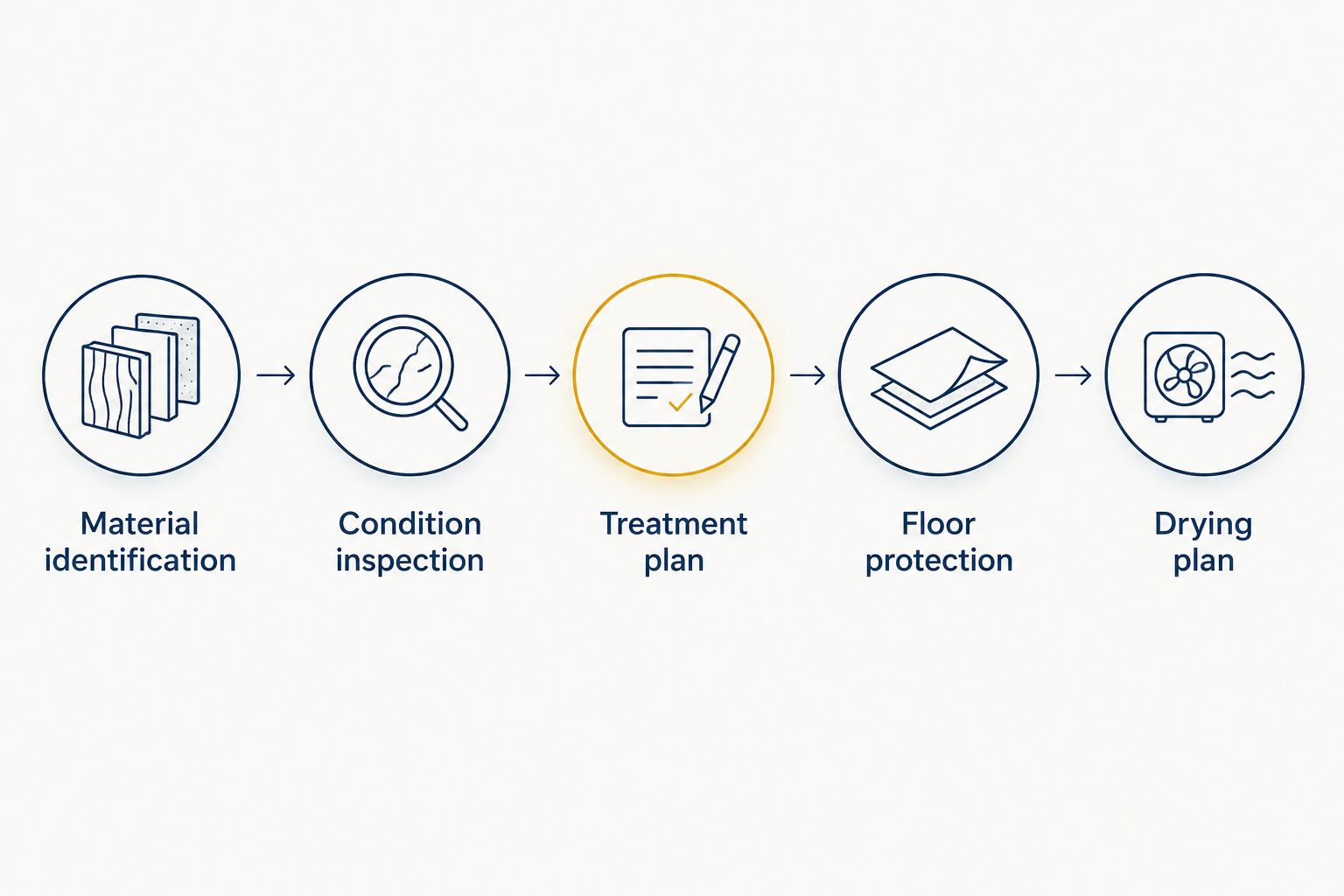
Use this sequence when speaking with a cleaner:
- Material identification: Share the fiber label, if present, and explain whether the rug has fringe, a separate pad or a glued backing. Do not assume a rug is synthetic because it looks machine-made.
- Condition inspection: Point out loose edges, worn areas, previous color transfer, curling and damaged backing. Cleaning does not repair those conditions.
- Treatment plan: Ask how the cleaner will address dry soil, embedded soil and individual spots without assuming the same method suits every rug.
- Floor protection: Confirm whether the rug needs moving and how moisture will be kept away from the floor and pad.
- Drying plan: Ask where drying will happen, what airflow is needed and when the rug can return to normal use.
These checks connect the estimate to your rug rather than to a generic room-cleaning package. If the provider cannot explain the proposed method without first inspecting the material, arrange that inspection before authorizing treatment.
Why this matters
An area rug is not simply a smaller piece of fitted carpet. Its face fibers, foundation, backing, fringe and pad can respond differently to moisture and cleaning products. A method that removes soil from the surface still needs to suit the rug’s construction.
Your floor matters, too. Cleaning a rug while it lies over wood or another moisture-sensitive surface requires a plan that accounts for the material underneath, not just the visible pile.
For a Boca Raton booking in 2026, the useful question is not whether a cleaner uses powerful equipment. It is whether the cleaner can explain the material limits, the treatment scope and the drying arrangements for your particular rug.
Which rug details should you send before an estimate?
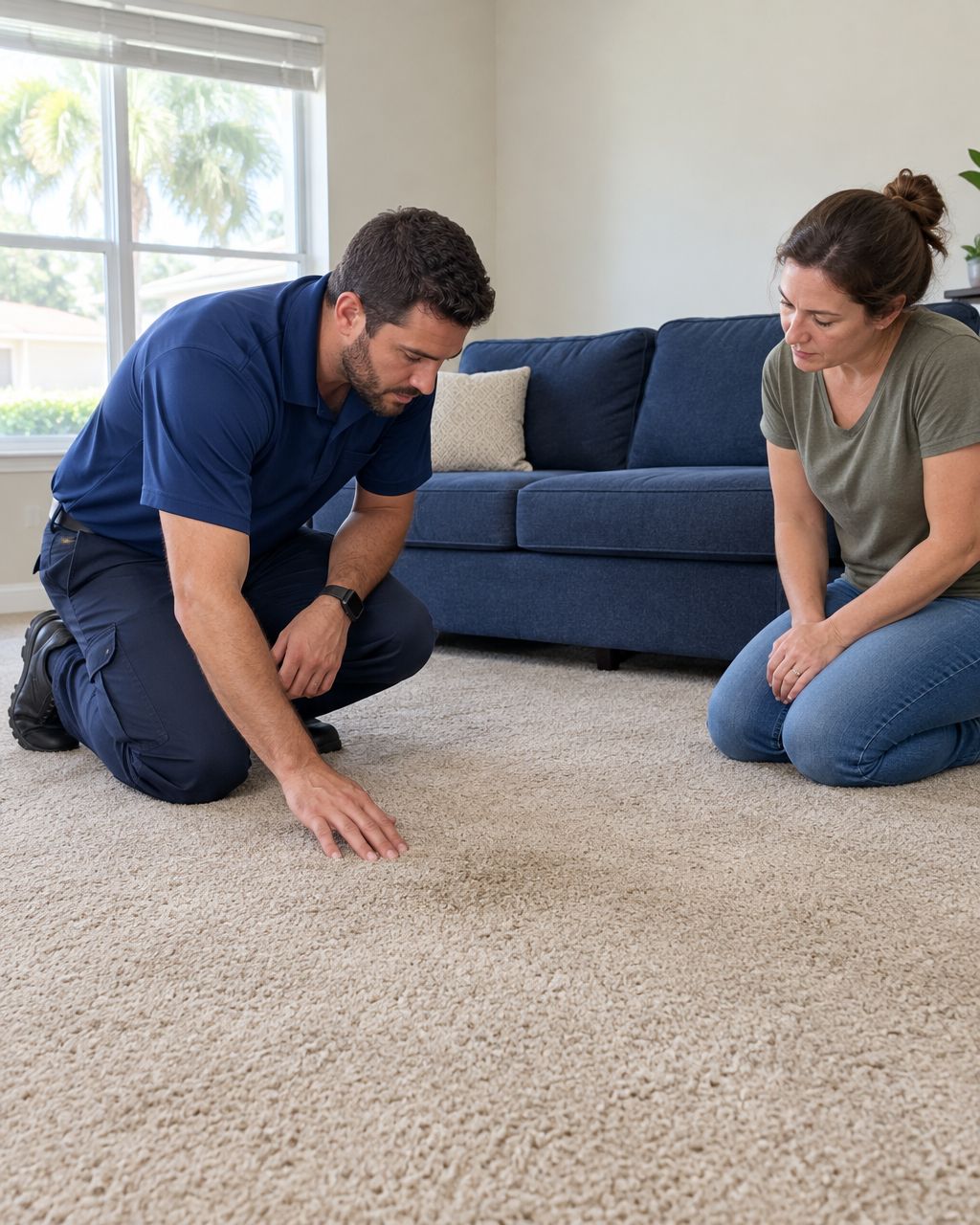
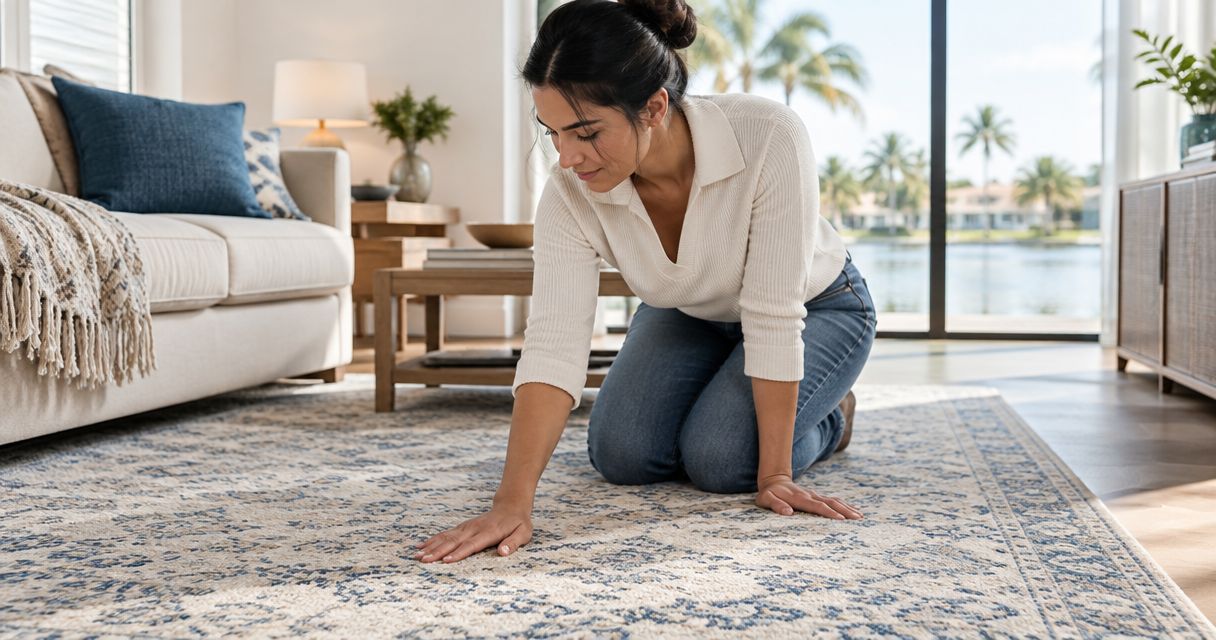
Send a full-rug photo, a close-up of the affected area and a photo of any care label. Include the underside if you can expose it safely. These views help distinguish a general soil problem from a localized stain or visible construction damage.
Describe the rug’s location and approximate dimensions using measurements you take yourself. Explain whether it sits beneath heavy furniture, over a pad or on a moisture-sensitive floor. Those details belong in the estimate discussion because access and handling affect the work involved.
Use the following table to match the assessment to the material. These are inspection priorities, not instructions to clean the rug yourself.
| Assessment focus | Best for | What the cleaner should check | Limitation to discuss |
|---|---|---|---|
| Fiber and dye assessment | Wool or other natural-fiber rugs | Fiber identification, color stability and suitable treatment | A fiber label alone does not establish that every dye is stable |
| Construction assessment | Rugs with glued or attached backing | Backing condition, existing separation and moisture suitability | Surface cleaning does not repair weakened backing |
| Delicate-material assessment | Silk, viscose or rugs with uncertain fibers | Material sensitivity and whether the proposed method is appropriate | The booking should wait until the material and treatment limits are understood |
| Contamination assessment | Rugs affected by pet accidents | Whether contamination reaches the foundation, pad or floor | Treating the rug face alone does not address contaminated material underneath |
If the label is missing, say so. A confident guess about the fiber is less useful than an honest description of what you know.
What should the cleaning plan explain?
A cleaning plan should separate soil removal, spot treatment and odor treatment. They address different problems and should not be treated as interchangeable promises.
Dry-soil removal addresses loose particles before wet treatment. Pre-treatment loosens suitable soils, agitation helps distribute treatment and release embedded soil, and extraction removes suspended soil and cleaning solution when the material permits that method. Ask which of those stages the proposed service includes.
Hot-water extraction is a cleaning method, not proof that a particular rug can tolerate it. Material inspection should determine the method; the method should not determine what the cleaner assumes about the material.
Ask the cleaner to explain any proposed treatment for fringe or edges separately. Those areas can have different construction and existing wear from the main rug face. A sensible plan identifies those differences instead of treating the whole rug as uniform.
Choose the method that fits the rug, not the strongest-sounding treatment. If a provider recommends a different approach after inspection, ask what finding prompted the change before approving it.
Why rug-cleaning outcomes vary
Two rugs with similar-looking marks can need different treatment. These factors explain why an estimate cannot responsibly promise identical results:
- Fiber type: The cleaning product and method need to suit the actual material, including any blend.
- Dye stability: A rug can contain colors that respond differently to moisture or treatment.
- Construction and backing: A woven foundation, attached backing and fringe each need consideration during inspection.
- Contamination depth: Soil or pet contamination below the face fibers requires a different discussion from a surface spot.
- Previous treatments: Residues, bleaching or color changes from earlier products can limit what cleaning achieves.
- Drying conditions: Placement, airflow and the material underneath affect how the rug should be handled after cleaning.
Describe these conditions rather than asking for a guaranteed result. The cleaner needs a history of the rug, not just a photograph of the darkest mark.
Can professional rug cleaning remove every stain?
No responsible cleaner can guarantee every stain. A visible mark can be removable soil, a stain that resists treatment, or permanent color damage; those are different conditions even when they look similar from across the room.
Tell the cleaner what caused the mark, when you noticed it and what you have already used. Name the product if you still have the container. Do not describe every household treatment as soap, because that leaves out information the technician needs.
Ask for the likely outcome of each significant spot. A useful answer distinguishes a reasonable attempt at removal from a promise of complete restoration. It also explains when further treatment would risk changing the fiber or color.
Avoid testing new chemical mixtures before the appointment. Follow the rug’s care instructions, and do not add bleach or another strong product in an attempt to make the professional treatment easier.
Does rug cleaning remove pet odor underneath the rug?
Rug cleaning does not automatically resolve contamination in a separate pad or the floor below it. If pet accidents have reached those layers, the treatment discussion needs to include them rather than focusing only on the visible spot.
Tell the cleaner whether accidents happened repeatedly in the same area. Explain whether you have noticed odor from the underside or after the rug became damp. Those observations help define the problem without proving that a particular treatment will solve it.
Ask these questions before authorizing pet odor work:
- Is the proposed treatment for the rug face only, or does it address deeper contamination?
- Does the separate pad need inspection?
- Will the floor underneath need attention outside the rug-cleaning scope?
- What outcome is realistic if contamination remains in another material?
Judge pet odor treatment by its scope, not by fragrance immediately after cleaning. A pleasant scent does not demonstrate that the contamination source has been addressed.
How should you prepare your Boca Raton home?
Clear small loose items from the work area and identify a safe access route. Tell the cleaner about stairs, building access requirements, parking restrictions or heavy furniture before the appointment. Do not assume furniture handling is included.
Keep pets away from the work area and arrange a place for them during treatment and drying. If your rug is in an HOA community or condominium, confirm the property’s access requirements separately from the cleaning booking.
Point out the floor material beneath the rug and whether a pad is present. Do not move a heavy or fragile rug yourself just to expose the underside; explain the situation and agree on handling first.
Before your 2026 appointment, put your observations in one message: rug material if known, affected areas, previous products, furniture obstacles and access instructions. That gives the cleaner a practical starting point and reduces avoidable misunderstandings about the visit.
What should you ask about drying?
Ask for a drying plan specific to the rug, not a fixed deadline copied from a carpet-cleaning advertisement. Fiber, construction, moisture remaining after treatment and room conditions all matter.
Confirm where the rug will dry and whether it needs separation from the pad or floor. Ask how to use airflow and indoor climate control safely, and follow the technician’s instructions rather than choosing direct sunlight or intense heat without material-specific guidance.
The rug face is not the only part that needs attention. Ask how to check the backing and any separate pad before returning furniture or resuming normal use.
When arranging rug cleaning in Boca Raton in 2026, include drying in the booking discussion. It should not become an unanswered question after the cleaner finishes.
When is a local mobile cleaning service the right fit?
Steamly Pro is best for local homeowners seeking mobile area rug cleaning in Boca Raton, Boynton Beach and Delray Beach. Confirm suitability for your specific rug before booking; mobile service does not mean every material or contamination problem can receive the same treatment.
The practical benefit is arranging cleaning around a rug already in your home. The limitation is that your rug’s construction, condition and drying needs still govern what treatment is appropriate. For delicate materials or uncertain construction, request an inspection-led recommendation rather than insisting on a particular process.
When requesting a free estimate, ask the provider to separate routine cleaning from additional stain or odor work and explain anything excluded. Keep that scope with your appointment details so you can confirm it again before treatment starts.
Request a rug cleaning estimate
Share your rug’s material, condition and location to discuss cleaning suitability and scope.
FAQ
What should I ask before booking rug cleaning in Boca Raton?
Ask about fiber identification, dye stability, backing condition, treatment scope, floor protection and drying. Explain previous stain treatments and any pet accidents before agreeing to the work.
Can you steam clean every area rug?
No, the rug’s material and construction determine whether hot-water extraction is appropriate. Ask for a suitability assessment rather than booking a method based only on the rug’s appearance.
Should I choose rug cleaning or carpet cleaning for an area rug?
Describe the item as an area rug and request an assessment of its fibers, backing and fringe. An area rug should not automatically receive the same treatment as fitted carpet.
Will professional rug cleaning remove old pet urine odor?
Professional cleaning cannot guarantee removal of old pet urine odor. The outcome depends on contamination depth and whether the rug foundation, separate pad or floor underneath is also affected.
How much does rug cleaning in Boca Raton cost in 2026?
Request a rug-specific estimate based on dimensions, material, condition, access and treatment scope. Ask whether stain treatment, pet odor work and handling are included before booking.
Can I put furniture back as soon as the rug feels dry?
Do not rely only on the surface feeling dry. Follow the cleaner’s instructions and confirm the condition of the backing and any separate pad before returning furniture.
Does Steamly Pro clean area rugs outside Boca Raton?
Steamly Pro offers mobile area rug cleaning across Palm Beach County, Broward County and Port St. Lucie, including Boynton Beach and Delray Beach. Request a free estimate and confirm the treatment is suitable for your rug.
One last thing
Photograph the rug’s underside before your appointment if you can reach it safely. A clean-looking face can hide a stained pad, deteriorating backing or evidence of color transfer below the rug.
For your 2026 booking, make one request explicit: inspect the rug and explain the limits before treatment begins. That is more useful than a promise to make every rug look new.