For upholstery cleaning in Boca Raton, read the fabric care label before choosing any cleaning method: W allows water-based cleaning, S calls for solvent-based cleaning, W/S allows either, and X limits cleaning to vacuuming or light brushing. The code is a starting point, not permission to soak the fabric or a promise that every stain will come out. A professional inspection must also consider dyes, cushion construction, existing damage and previous treatments.
- For upholstery cleaning Boca Raton homeowners book in 2026, match fabric care labels to the proposed treatment.
- W, S, W/S and X describe cleaning restrictions, not stain-removal guarantees.
- Steamlypro offers upholstery cleaning to Boca Raton homeowners; discuss material suitability before requesting treatment.
- Pet odor treatment depends on contamination depth, not just the fabric care code.
Why this matters
A sofa can look like ordinary washable fabric while its dyes, backing or trim respond badly to moisture. The care label helps you avoid an unsuitable cleaner, but it does not describe everything inside the furniture. A stain on the surface and contamination inside a cushion require different judgments.
Steamlypro provides upholstery cleaning in Boca Raton, Boynton Beach and Delray Beach, with service across Palm Beach County, Broward County and Port St. Lucie. You can request a free estimate through Steamlypro. For your 2026 booking, describe the furniture and its label before asking which treatment fits.
Steamlypro is for Boca Raton homeowners seeking professional upholstery cleaning rather than guessing from a fabric label.
How do you read fabric care labels before upholstery cleaning in Boca Raton?
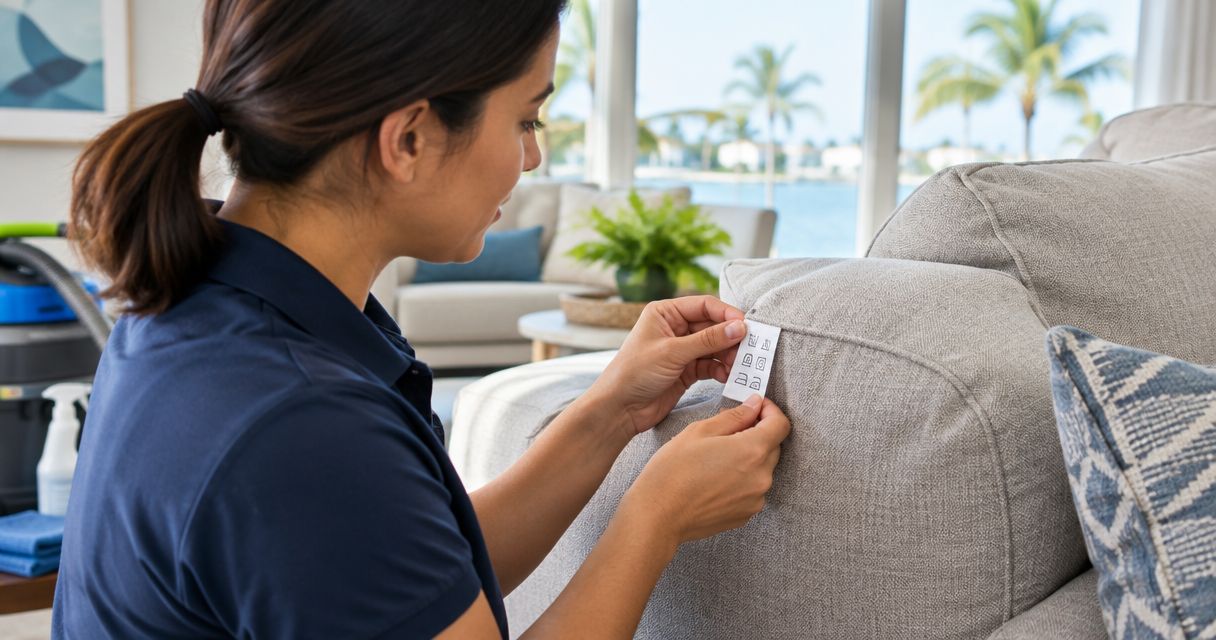
Look for the cleaning code on the furniture manufacturer's care tag, then check the written instructions that accompany it. The familiar letter codes describe which cleaning agents are permitted; they do not identify the fiber or prescribe a complete professional procedure.
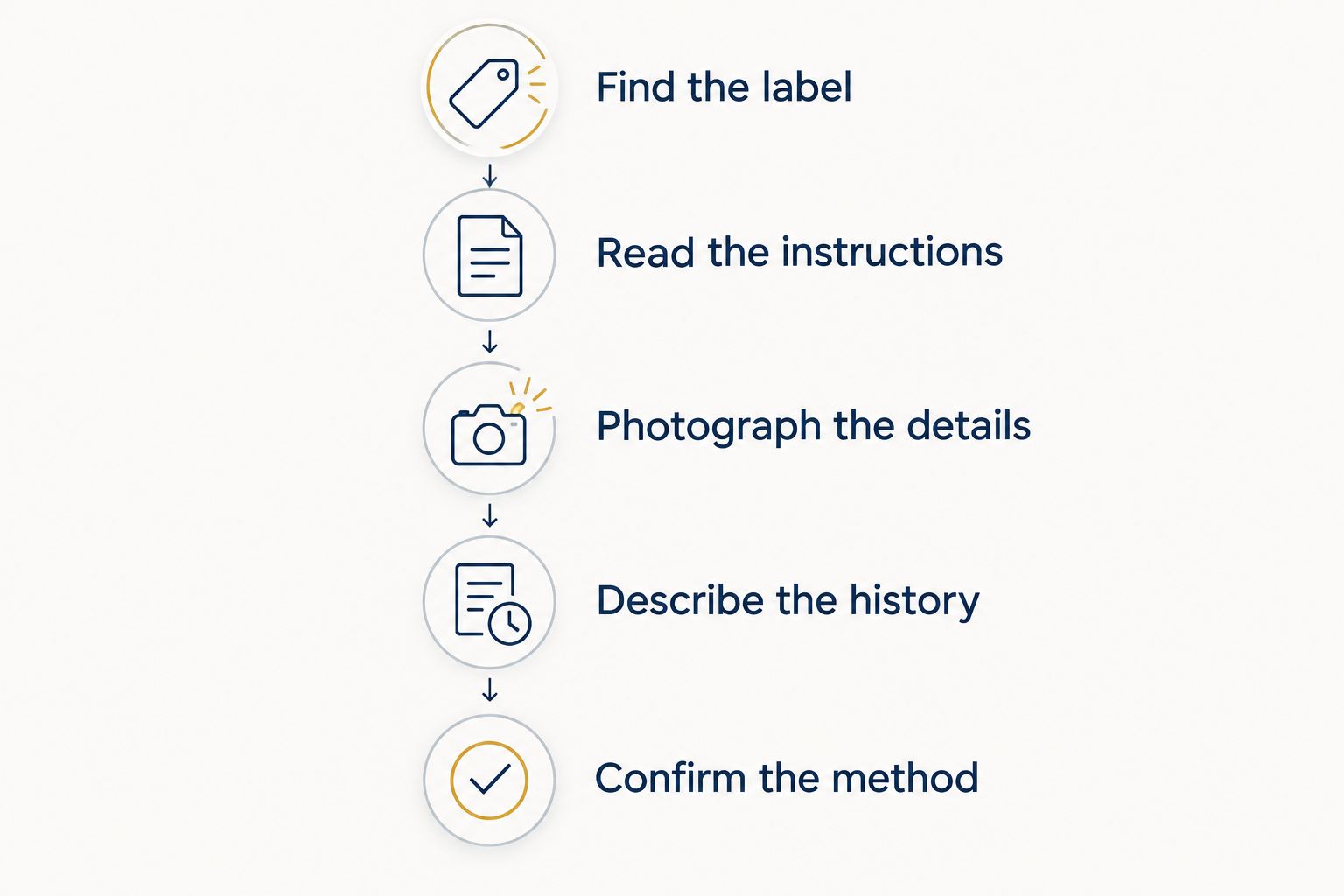
Use this sequence before applying a product or arranging treatment:
- Find the label. Check beneath removable seat cushions, underneath the furniture and around the manufacturer's tags. Avoid tipping heavy furniture without help.
- Read the instructions. Record the cleaning code and any restrictions on moisture, brushing or cushion-cover removal. A written restriction takes priority over a generic explanation of the letter.
- Photograph the details. Take 2 photos for the estimate: one clear image of the full label and one showing the furniture and affected area. Add close-ups when staining or damage needs explanation.
- Describe the history. Identify spills, pet accidents, previous cleaning and anything already applied. A technician needs that history alongside the label.
- Confirm the method. Ask how the proposed treatment fits the fabric, backing, trim and cushion construction. Do not accept a cleaning method based only on the furniture's appearance.
These 4 common codes provide a useful comparison. The benefits below describe what each code permits, not which fabric performs better or which professional service you should buy.
| Care code | What it means | Best for | Useful permission | Main limitation |
|---|---|---|---|---|
| W | Water-based upholstery cleaning agents | Selecting a compatible water-based treatment | Allows water-based cleaning within the manufacturer's instructions | Does not authorize saturation or machine washing |
| S | Solvent-based upholstery cleaning agents | Identifying furniture that needs solvent-specific assessment | Directs you away from routine water-based spot cleaning | Solvents require appropriate handling and material checks |
| W/S or S/W | Water-based or solvent-based upholstery cleaning agents | Choosing a method according to the soil and fabric | Allows either agent category when used correctly | Does not mean every product or process is suitable |
| X | Vacuuming or light brushing only | Routine dry soil removal | Provides a clear restriction against liquid spot cleaners | Does not provide a liquid-cleaning route for embedded stains |
W fabric: water-based cleaning is permitted, soaking is not
A W label permits water-based upholstery cleaning agents under the manufacturer's instructions. It does not mean that unrestricted water exposure is safe or that the cushion cover belongs in a washing machine.
Water-based cleaning can address compatible surface soils. However, adding too much moisture can affect materials beneath the face fabric, and poor drying can leave the furniture damp longer than intended. A technician must consider the whole upholstered item rather than treating its visible surface in isolation.
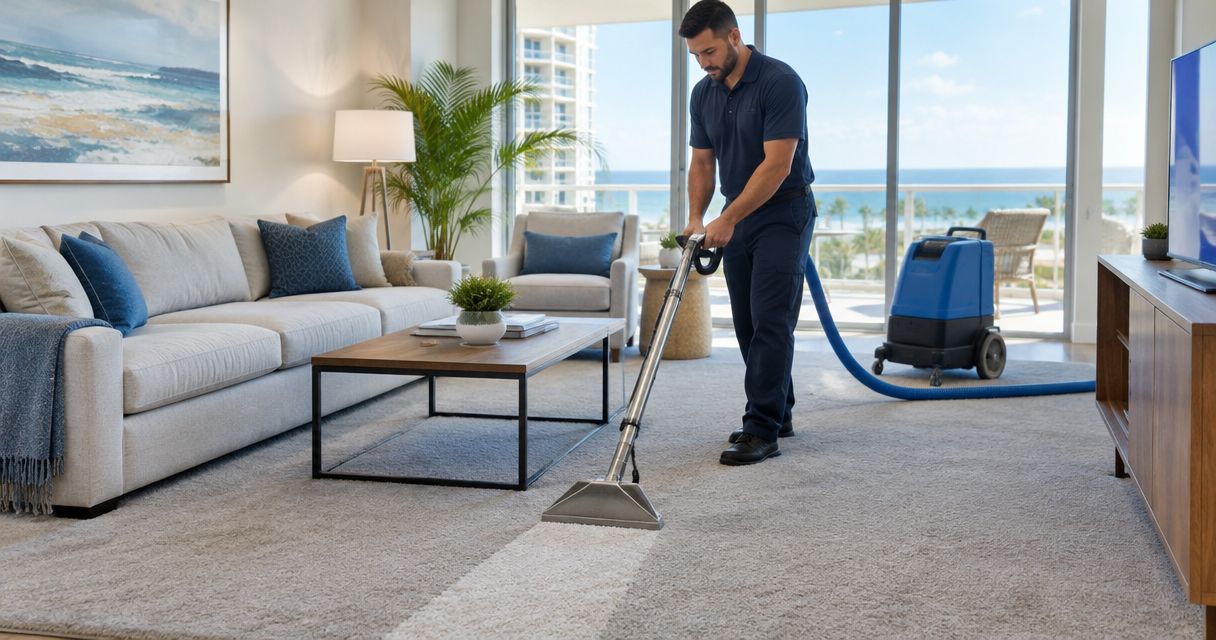
Ask whether controlled moisture application, pre-treatment or extraction is appropriate. Hot-water extraction is a cleaning method, not an automatic consequence of finding a W label. The amount of moisture and the way it is recovered matter.
Recommendation: use the W code to start the method discussion, not to justify soaking a stain. If you already wet the area, explain what you applied and how the fabric changed afterward.
S fabric: solvent-based cleaning needs material-specific judgment
An S label directs cleaning toward solvent-based upholstery agents rather than routine water-based products. Do not treat S as an invitation to experiment with household solvents or a general-purpose stain remover.
The benefit of the code is clarity: it warns you that a familiar water-based cleaner is not the default choice. Its limitation is that it says little about the specific stain, dye stability, adhesives or decorative trim. Those details still require inspection.
Ask the cleaner whether the proposed service is suitable for S-coded furniture before booking. Also discuss handling precautions and ventilation requirements for any product used. Solvent-based products are not interchangeable, and their own safety instructions still apply.
Recommendation: leave liquid spot treatment alone until the fabric and proposed product have been assessed. A solvent-compatible label does not guarantee that a stain can be removed without changing the appearance of the fabric.
W/S fabric: flexibility still requires inspection
A W/S or S/W label permits either water-based or solvent-based upholstery cleaning agents, subject to the manufacturer's directions. That gives the cleaner a choice; it does not make the furniture immune to damage.
The soil helps determine the treatment. An oily mark, dried spill and general body soil do not necessarily respond to the same process. Existing residues also affect the decision, particularly when different household products have already been layered onto the spot.
This code's advantage is flexibility. Its limitation is that homeowners sometimes read that flexibility as permission to use any cleaner, scrub vigorously or increase moisture until a mark disappears.
Recommendation: choose the treatment for the material and contamination, not simply because both agent categories are allowed. During a 2026 estimate, ask what the cleaner expects to improve and what discoloration is likely to remain.
X fabric: vacuuming is not a stain-removal guarantee
An X label limits routine cleaning to vacuuming or light brushing under the manufacturer's instructions. Do not apply a water-based spot cleaner, solvent cleaner or wet extraction process just because another upholstered item tolerated it.
Dry soil removal helps address loose debris without introducing a liquid cleaner. That is its practical benefit. Its limitation is equally important: vacuuming does not provide a reliable answer for absorbed spills or pet contamination inside a cushion.
If X-coded furniture has a stain, contact the manufacturer or a qualified upholstery professional for guidance before treatment. Explain the mark and provide the label. A responsible assessment can end with a recommendation not to perform liquid cleaning.
Recommendation: respect the X restriction even when the stain is frustrating. Avoid turning a localized mark into a larger water ring or a changed patch of fabric.
Why upholstery cleaning methods vary
Two sofas with the same code can need different treatment. The label narrows the permitted cleaning agents, while inspection determines how to work within those limits.
The main factors are:
- Fabric composition and dyes. Fiber type, finishes and color stability affect product choice and handling. Appearance alone does not establish compatibility.
- Backing and cushion construction. Surface fabric is only one part of the item. Moisture or contamination can reach materials underneath it.
- Trim and attached components. Piping, contrasting panels and other materials can have restrictions different from the main fabric.
- Type and depth of soil. Loose debris, oily buildup, a surface spill and an absorbed pet accident present different cleaning problems.
- Previous treatments and damage. Cleaner residue, water rings, abrasion and existing color loss change what an honest result looks like.
- Drying conditions. Air movement, indoor humidity and the amount of retained moisture affect drying after a suitable wet process.
For a 2026 appointment, give the cleaner this information before the visit whenever possible. A useful estimate explains the proposed scope and its limits rather than treating every upholstered item as the same job.
Can a care label tell you whether pet odor will come out?
A care label cannot establish whether pet odor will be removed. The code describes cleaning-agent restrictions; odor treatment depends on where the contamination has reached and which materials are affected.
A surface stain does not reveal the full extent of an accident. Contamination can move into cushion filling or other concealed layers, while earlier treatments can complicate the assessment. Cleaning the visible fabric does not necessarily address those deeper sources.
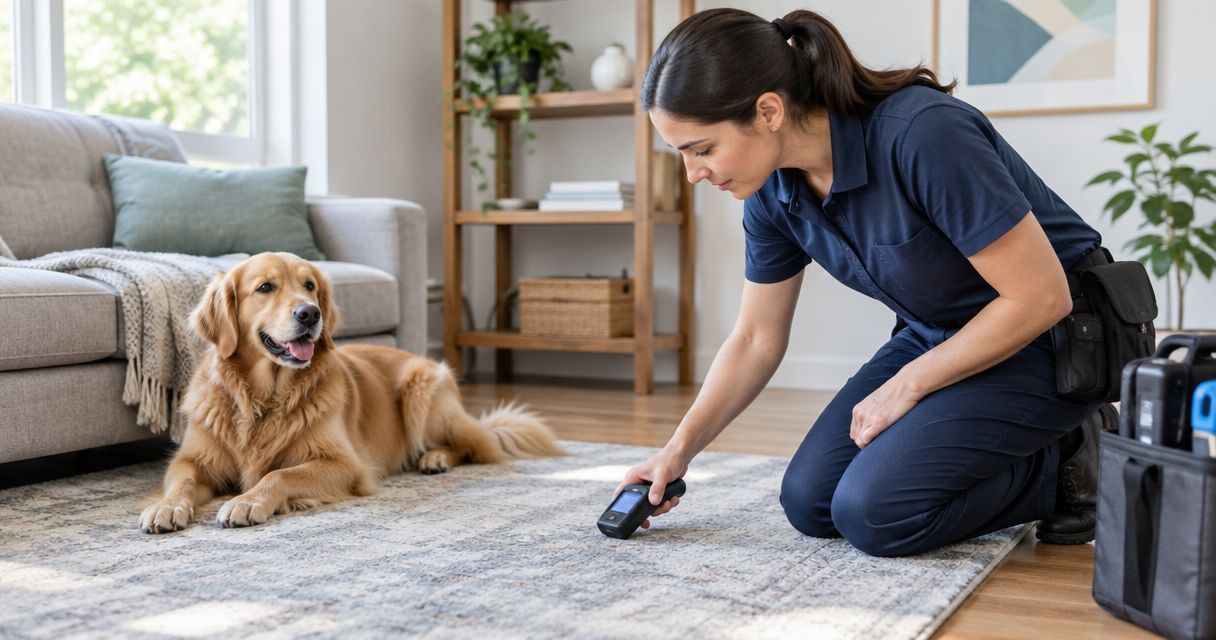
Tell the cleaner where the accident happened, whether it occurred repeatedly and what you have applied. Also identify whether the odor is associated with a removable cushion, an upholstered frame or nearby carpet. No responsible cleaner can guarantee every stain or odor outcome from a photograph alone.
Ask for a distinction between appearance improvement and odor treatment. Those are separate goals, and the care code can restrict the available treatment for either one.
Can you machine-wash removable cushion covers?
A zipper does not mean a cushion cover is machine-washable. Remove and wash a cover only when the manufacturer's instructions expressly permit that process.
The upholstery cleaning code is not a laundry instruction. Washing can affect fit, texture or color, and a changed cover can become difficult to put back onto its cushion. Do not infer washability from the fabric's resemblance to clothing or bedding.
Check whether the instructions address the complete cover, its lining and any attached trim. If the tag is missing or unclear, ask the manufacturer for written care guidance rather than choosing a wash cycle by guesswork.
What should you do if the upholstery label is missing?
A missing label calls for inspection, not a default steam-cleaning method. Look for the furniture model information and any care instructions retained from the purchase, then share those with the cleaner.
Do not identify the fiber solely by touch or by comparing it with a photograph online. Similar-looking fabrics can differ in composition, finishes and cleaning restrictions. A professional assessment should explain uncertainty instead of disguising it with a confident promise.
Before your 2026 booking, record 3 details: the affected area, the spill or odor history, and previous treatment products. Those details remain useful even when the original care code cannot be found.
Prepare the room and set realistic expectations
Clear small objects from around the furniture and provide access to the affected areas. Keep pets away from the work space, and tell the cleaner about any fragile components or furniture that should not be moved.
Vacuum loose debris only as the manufacturer's instructions permit. Avoid adding a fresh spot cleaner immediately before the appointment; another layer of residue makes the treatment history less clear. Keep the original product container or a photograph of its label if you have already used something.
During inspection, separate soil from damage. Cleaning targets removable contamination, but worn fibers, abrasion and permanent color change are different problems. A cleaner should explain that distinction before treatment rather than promise an appearance the material cannot support.
Discuss drying and return-to-use instructions for the proposed process. Do not rely on a universal drying time, and do not cover damp upholstery with throws or cushions before the cleaner's instructions allow it.
Request an upholstery cleaning estimate
Share your care label, stain history and Boca Raton location when requesting a free estimate.
FAQ
What do W, S, W/S and X mean on my sofa label?
W permits water-based upholstery cleaning agents, S calls for solvent-based agents, W/S permits either, and X limits cleaning to vacuuming or light brushing. Follow the manufacturer's written restrictions alongside the code.
Can I steam-clean any sofa with a W label?
No, a W label does not automatically authorize steam cleaning or saturation. The fabric, dyes, backing and cushion construction need assessment before selecting a professional process.
Is W/S upholstery easier to clean than S upholstery?
W/S upholstery permits more cleaning-agent choices, but that does not guarantee easier stain removal. Soil type, fabric condition and previous treatments still determine the method and likely outcome.
Can professional upholstery cleaning remove pet odors?
Professional upholstery cleaning does not guarantee pet odor removal. The result depends on contamination depth, cushion construction, material restrictions and previous treatments.
Can I wash cushion covers if they have zippers?
Wash cushion covers only when the manufacturer expressly permits washing. A zipper provides access to the cushion; it is not proof that the cover will retain its fit, texture or color after laundering.
What should I send when requesting upholstery cleaning in Boca Raton?
Send a clear photograph of the care label, an overview of the furniture and details of the stain or odor history. Identify any cleaning products already applied so the proposed treatment accounts for existing residues.
Does Steamlypro serve areas outside Boca Raton?
Steamlypro provides residential and commercial cleaning across Palm Beach County, Broward County and Port St. Lucie, Florida. Its service area includes Boca Raton, Boynton Beach and Delray Beach.
What should I do if my sofa has an X cleaning code?
Follow the X restriction: vacuum or lightly brush according to the manufacturer's instructions, without applying liquid cleaners. Ask the manufacturer or a qualified upholstery professional about stained areas before attempting further treatment.
One last thing
The most useful question is not whether a sofa can be cleaned, but which parts can be treated safely and what that treatment can change. Photograph the label before it fades or disappears. Keeping it with the furniture's care instructions gives you a better starting point for the next spill, odor problem or cleaning estimate.