
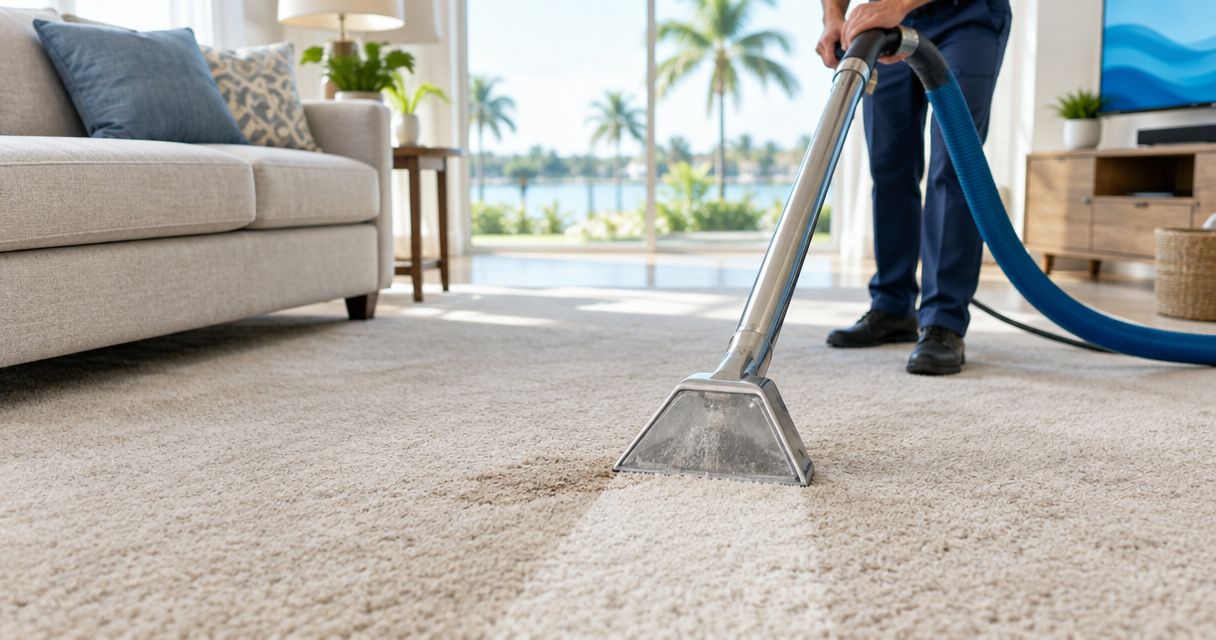
Spots that return after carpet cleaning in Port St. Lucie usually need a diagnosis, not another round of scrubbing: soil can wick up from below the surface, cleaning residue can attract new dirt, and permanent discoloration can resemble a stain. Pet contamination adds another concern when odor or staining extends into the backing or padding. Identify what is returning before choosing the next treatment.
- Carpet cleaning Port St Lucie appointments should address returning spots through inspection, not repeated surface treatment.
- Wicking brings soil back to the surface as carpet dries; residue attracts dirt after cleaning.
- Steamly Pro serves Port St. Lucie homeowners seeking carpet cleaning with realistic stain and pet odor expectations.
- A returning mark does not prove the carpet needs replacement, but permanent discoloration cannot be cleaned away.
Why do spots return after carpet cleaning in Port St. Lucie?
Returning spots have different causes, and their timing helps separate them. A mark that reappears during drying points toward wicking; a patch that becomes dirty again with use points toward residue or repeated exposure. Neither pattern is a diagnosis by itself.
For local help, Steamly Pro offers carpet cleaning in Port St. Lucie alongside service across Palm Beach County and Broward County. When requesting an estimate in 2026, describe when the spot returns and what you have already applied.
| Possible cause | What you notice | Best next step | Limitation |
|---|---|---|---|
| Wicking | A previously treated mark reappears as the carpet dries | Inspect the spill history, backing and moisture conditions | Surface treatment alone does not establish how deep contamination extends |
| Cleaning residue | A treated patch attracts dirt or feels different from nearby carpet | Review products used and assess rinsing needs | Appearance alone cannot identify the remaining product |
| Repeated contamination | The same area receives new spills, pet accidents or tracked soil | Address the source as well as the affected carpet | Cleaning cannot prevent a new incident |
| Permanent discoloration | A mark remains despite removal of removable soil | Assess fiber condition and explain realistic outcomes | Cleaning cannot restore color that has been chemically changed or lost |
These categories can overlap. A pet accident treated repeatedly with household products can involve contamination, residue and discoloration in the same location. A useful inspection separates those problems instead of treating every dark patch as ordinary dirt.
Why this matters
Repeatedly wetting a returning spot can make the problem harder to assess. It also leaves you without a clear record of whether the original spill, a cleaning product or a new incident caused the current appearance.
Before your 2026 appointment, stop adding products and record the spot's history. A photograph taken after cleaning and another after the mark returns give the technician something concrete to compare. Include odor changes, not just changes in color.
Steamly Pro carpet cleaning is best suited to local homeowners seeking material inspection and realistic treatment expectations, rather than a promise that every stain will disappear. That distinction matters when you are deciding whether another cleaning attempt is justified.
Wicking: a spot returns as the carpet dries
Wicking occurs when moisture carries dissolved or suspended soil toward the carpet surface during drying. The top of the carpet can look clean immediately after treatment while material below the visible fibers remains a source of discoloration.
A large spill deserves particular attention because the visible spot does not establish the full affected area. Liquid can travel beyond the mark you see. Carpet construction, backing and underlying materials influence where it goes and what a surface cleaning can reach.
Best for suspected wicking: an inspection that connects the returning mark to the original spill and drying pattern. Tell the technician whether the mark appeared before the carpet finished drying, whether its edges changed, and whether you treated it more than once.
Targeted cleaning and controlled moisture use address a different problem from simply scrubbing the visible fibers. The limitation is depth: removing surface soil does not prove that all affected material underneath has been treated. Ask what the technician can assess without lifting the carpet and what further inspection would require.
Residue: a treated patch gets dirty again
Cleaning residue can remain when a product is overapplied or not adequately removed. That residue can attract soil, making a previously treated patch stand out again after normal household use.
The useful clue is not just that the spot returned. It is whether the patch gradually became dirty, feels sticky or stiff, or matches the area where a spot cleaner was applied. Those observations help, but they do not identify a chemical or prove residue is the only cause.
Best for suspected residue: product-history review and a material-appropriate rinsing assessment. Keep the product container or photograph its label so the technician knows what touched the carpet. Include professional treatments and household products alike.
Rinsing can address removable residue, but it cannot reverse damage caused by an unsuitable product. Avoid adding another cleaner to counteract the previous one. That creates a more complicated treatment history without establishing what the carpet needs.
Pet contamination: the spot and odor need separate assessment
A visible pet stain and a recurring odor do not always have the same treatment boundary. Contamination can extend into carpet backing or padding, while the surface mark shows only part of the affected area.
Odor that returns after cleaning calls for a depth assessment, not a stronger fragrance. Tell the technician where accidents occurred, whether they happened repeatedly, and whether the odor changes when the area becomes damp. Keep those observations separate from assumptions about where the contamination ends.
Best for recurring pet odor: an inspection of the affected materials and prior treatments. The pet odor removal inspection guide explains the questions to raise before approving treatment.
Surface cleaning has a clear limitation when the odor source sits below the fibers being cleaned. Discuss whether treatment can reach the affected material and what remains outside its scope. No responsible cleaner can guarantee every stain or odor will disappear.
Permanent discoloration: cleaning has a stopping point
Not every mark is removable soil. Bleaching, chemical changes and physical wear can alter the carpet's color or appearance even after loose and embedded dirt have been removed.
That distinction protects you from paying for repeated attempts at the wrong problem. Ask whether the technician sees removable contamination, altered color, fiber damage or a combination. An explanation of the suspected cause is more useful than an unconditional stain-removal promise.
Best for suspected discoloration: a candid assessment before further treatment. Cleaning can remove soil surrounding a damaged area, but that does not mean the damaged area will match the rest of the carpet afterward.
For your 2026 estimate, ask the cleaner to distinguish the expected cleaning result from the expected appearance of the remaining mark. Those are different outcomes. A cleaner carpet can still contain permanent discoloration.
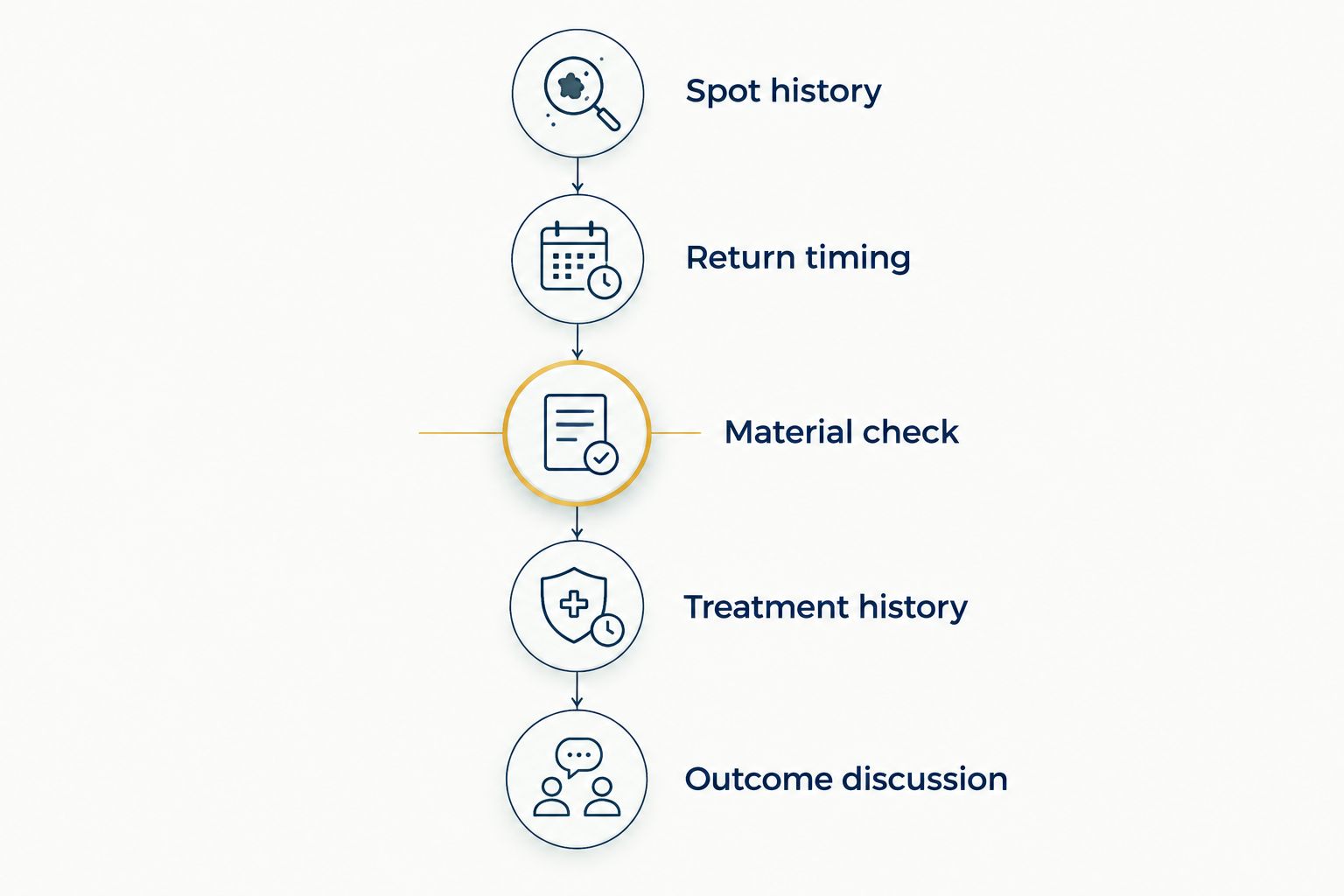
What should an inspection of returning carpet spots include?
A useful inspection follows the evidence from the visible mark to the treatment history and affected materials. You do not need to identify the cause yourself. You do need to give the technician accurate information before more moisture or chemistry is introduced.
- Spot history. Explain the original spill or accident if you know it. Identify whether the same location has been affected repeatedly, and distinguish known events from guesses.
- Return timing. Describe whether the spot reappeared during drying or became noticeable after later use. Include photographs that show changes in shape or intensity.
- Material check. Ask the technician to assess carpet construction, condition and treatment suitability. A method appropriate for one material is not automatically appropriate for another.
- Treatment history. List spot cleaners, detergents, fragrances and previous cleaning attempts. Show labels rather than relying on descriptions such as strong cleaner or pet spray.
- Outcome discussion. Ask what treatment is intended to remove, what it cannot reach, and which marks are expected to remain. Agree on what to do if the spot returns again.
The purpose of this sequence is to make the treatment decision explainable. Inspection should lead to a specific reason for the proposed approach, not simply to the same treatment being repeated.
Why returning carpet spots vary
The same-looking mark can have a different cause in another room or home. These factors change both the diagnosis and the limits of treatment:
- Contamination depth: Soil at the fiber surface presents a different problem from contamination in backing or padding.
- Carpet construction: Fiber, backing and installation affect material suitability and access to the affected area.
- Previous products: Residue and chemical changes complicate the assessment of the original spill.
- Repeated exposure: New pet accidents, spills or tracked soil can make a cleaned area look untreated.
- Drying conditions: Air movement and indoor humidity influence drying, which matters when evaluating a suspected wicking pattern.
For Port St. Lucie homeowners planning cleaning in 2026, the practical move is to describe the room conditions rather than assume the outdoor weather explains everything. Tell the technician about ventilation and climate control. Ask for drying guidance appropriate to the actual carpet and treatment.
What should you do when a carpet spot comes back?
Stop repeating the same spot treatment and document the change. Photograph the area, note whether it is dry or damp, and record when the mark became visible again. Avoid soaking it to see whether it will disappear a second time.
If a fresh spill caused the mark, blot it gently with a clean, absorbent cloth rather than aggressively scrubbing. Do not mix cleaning products. Keep pets and household traffic away from a damp treated area, and follow the cleaner's material-specific instructions.
Contact the cleaner with the photographs and treatment history. Ask whether the return pattern suggests wicking, residue, renewed contamination or discoloration, and whether an inspection is needed before another treatment.
Does a returning spot mean you need new carpet?
A returning spot does not establish that carpet replacement is necessary. Removable residue and wicking require a different assessment from permanent fiber damage or contamination that extends into underlying materials.
Ask what material is affected and why cleaning is or is not suitable. Replacement decisions should follow that assessment, not the fact that a visible mark returned once.
Can you use carpet spot cleaner on a rug or sofa?
Do not assume a carpet spot cleaner is suitable for an area rug or upholstery. Fiber, dyes, backing, fabric construction and care instructions can differ, even when the original spill is the same.
Tell the technician about the separate item before booking. A sofa stain or rug odor needs its own material assessment rather than an extension of the carpet treatment plan.
Request an estimate with the spot history ready
Steamly Pro provides mobile residential and commercial cleaning for homeowners, HOA communities and businesses across Palm Beach County, Broward County and Port St. Lucie. Its services include carpet, tile and grout, upholstery, and area rug cleaning; each material needs its own treatment decision.
When asking for a free estimate, describe the affected room, the returning spot, any odor, and the products already used. For a 2026 appointment, include access details and identify any additional rugs or upholstered items you want assessed. Ask for realistic expectations before approving treatment.
Request a carpet cleaning estimate
Describe the returning spot, prior treatments and any pet odor when asking for a free estimate.
FAQ
Why did my carpet stain come back after professional cleaning?
A carpet stain can return because soil wicks upward during drying, residue attracts new dirt, or the area receives new contamination. Permanent discoloration can also resemble a remaining stain, so return timing and treatment history matter.
How can I tell whether a returning spot is wicking?
A spot that reappears as carpet dries is consistent with wicking, but timing alone does not confirm the cause. Describe the original spill and ask the technician to assess contamination depth and prior treatments.
Should I keep scrubbing a carpet spot that comes back?
Do not keep scrubbing a returning carpet spot. Stop adding products, photograph the mark and discuss an inspection before repeating treatment.
Can professional carpet cleaning remove every pet stain and odor?
No responsible cleaner can guarantee removal of every pet stain or odor. Results depend on the affected materials, contamination depth, permanent discoloration and previous treatments.
Does a returning stain mean the carpet cleaner did something wrong?
A returning stain alone does not establish that the carpet cleaner did something wrong. Wicking, residue, renewed contamination and discoloration need to be distinguished before assigning a cause.
What should I tell a Port St. Lucie carpet cleaner before requesting an estimate?
Tell the carpet cleaner when the spot returns, what originally affected the area, and which products you have used. Include any pet odor, repeated accidents and photographs of the changing mark.
Can the same cleaning treatment be used on carpet, upholstery and area rugs?
The same cleaning treatment is not automatically suitable for carpet, upholstery and area rugs. Each item needs a material assessment because fibers, dyes, backing and construction can differ.
One last thing
A returning spot's timing is often more useful than its size. A small mark that reappears during drying tells a different story from a large patch that slowly attracts dirt after household use resumes.
Before you wipe away that evidence, take a photograph and write down when the change occurred. Bring that record to the inspection. It gives the technician a clearer starting point than another application of spot cleaner.